
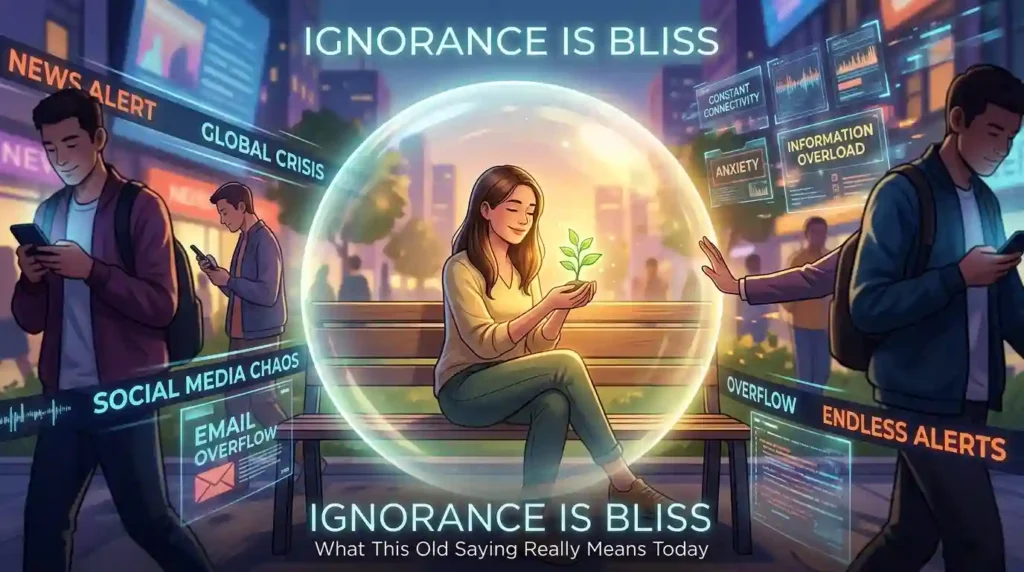
The ignorance is bliss meaning suggests that sometimes not knowing certain facts can make a person feel happier, calmer, or less stressed. However, the phrase does not mean ignorance is always good. In many situations, avoiding knowledge can lead to poor decisions or missed opportunities.
But what does this famous expression actually mean?
Today, this saying appears in everyday conversations, literature, psychology discussions, and online debates about information overload.
This article explores the true meaning behind “ignorance is bliss,” its history, examples, psychological perspective, and how it applies to modern life.
What Does “Ignorance Is Bliss” Mean?
The phrase ” ignorance is bliss meaning’’ that a lack of knowledge about a problem or unpleasant reality can sometimes create a feeling of happiness or peace.
In simple terms:
Not knowing something difficult may feel better than knowing the truth.
Simple Examples:
- Someone feels happier because they do not know about a negative comment made about them.
- A person enjoys a surprise because they do not know the details beforehand.
- Someone avoids worrying about a problem because they are unaware it exists.
However, the phrase is often used with a warning. While ignorance may provide temporary comfort, knowledge is usually necessary for making informed choices.
Ignorance Is Bliss Meaning Explained With Examples
Understanding the phrase becomes easier through everyday situations.
Example 1: Avoiding Bad News
Imagine someone has an upcoming medical test and chooses not to research possible outcomes.
They might feel less anxious because they do not know what could happen.
In this situation, ignorance creates temporary emotional relief.
Example 2: A Surprise Gift
A person receives a birthday surprise because they had no idea what was planned.
Their lack of knowledge creates excitement and happiness.
Here, ignorance produces a positive experience.
Example 3: Workplace Problems
An employee does not realize their project has serious issues.
They feel relaxed because they are unaware of the challenges.
However, this type of ignorance may eventually create bigger problems.
Where Did the Phrase “Ignorance Is Bliss” Come From?
The expression has a long literary history.
The phrase is commonly associated with the English poet Thomas Gray, who used a similar idea in his 1742 poem “Ode on a Distant Prospect of Eton College.”
The famous line:
“Where ignorance is bliss, ’tis folly to be wise.”
suggested that sometimes knowing less can protect people from unnecessary worries.
Over time, the phrase became shortened into the popular expression:
“Ignorance is bliss.”
Ignorance Is Bliss Meaning Has Changed Over Time
Originally, the phrase reflected the idea that innocence and lack of knowledge could protect people from sadness.
Today, people use it in broader ways.
| Time Period | Meaning |
| 18th Century | Innocence can protect happiness |
| 19th Century | Lack of knowledge may reduce suffering |
| Modern Usage | Avoiding information can sometimes reduce stress |
The modern interpretation is more balanced.
People recognize that ignorance can create comfort, but knowledge often provides power and control.
The Psychology Behind “Ignorance Is Bliss”
Psychologists have studied why people sometimes avoid information.
Humans naturally try to protect themselves from emotional discomfort.
Research in psychology shows that people may avoid unpleasant information because it can increase:
- Stress
- Anxiety
- Fear
- Emotional discomfort
This behavior is sometimes called information avoidance.
People may avoid checking:
- Financial problems
- Health concerns
- Negative feedback
- Difficult decisions
because knowing the truth may feel overwhelming.
Is Ignorance Really Bliss?
The answer depends on the situation.
Ignorance can be beneficial when:
- Information creates unnecessary stress
- A surprise is involved
- The knowledge has no practical value
- A person needs temporary emotional protection
However, ignorance becomes harmful when:
- Important decisions depend on accurate information
- Problems need immediate action
- Avoiding facts creates bigger risks
Comparison Table
| Situation | Ignorance Effect |
| Surprise party | Positive happiness |
| Ignoring financial debt | Harmful |
| Avoiding unnecessary online drama | Helpful |
| Ignoring health symptoms | Dangerous |
Ignorance vs Knowledge: Which Is Better?
Knowledge is generally considered valuable because it helps people make better decisions.
The famous phrase:
“Knowledge is power”
represents the opposite idea.
Knowledge Provides:
- Better decision-making
- Awareness
- Preparation
- Problem-solving ability
Ignorance May Provide:
- Temporary comfort
- Less stress
- Emotional protection
The best approach is balance.
People do not need to know everything, but they should not avoid important information.
Why People Still Use This Phrase Today
Modern life creates an enormous amount of information.
People constantly receive:
- News updates
- Social media posts
- Opinions
- Notifications
- Personal messages
According to research from Pew Research Center, many people regularly encounter large amounts of online information, making decisions about what information to consume increasingly important.
Because of information overload, some people intentionally choose not to know certain things.
For example:
“I stopped reading comments because ignorance is bliss.”
Here, the person means avoiding negativity improves their emotional well-being.
The phrase ” ignorance is bliss meaning’’ has been used for centuries, but its meaning remains relevant in modern life. You may have heard someone say it when avoiding unpleasant information, skipping stressful news, or choosing not to know something that could create worry.
Examples of “Ignorance Is Bliss” in Daily Conversations
Example 1: Social Media
“I don’t want to check what people said about my post. Ignorance is bliss.”
Meaning:
Avoiding negative comments helps maintain happiness.
Example 2: Relationships
“Sometimes ignorance is bliss when it comes to small things.”
Meaning:
Not knowing minor details may prevent unnecessary arguments.
Example 3: Entertainment
“Don’t tell me the ending. Ignorance is bliss.”
Meaning:
Not knowing the spoiler makes the experience better.
Ignorance Is Bliss in Popular Culture
The phrase appears frequently in:
- Movies
- Books
- Television shows
- Music
- Online discussions
Writers often use it to explore questions like:
- Is truth always better?
- Can people be happier without certain knowledge?
- Does awareness create responsibility?
These themes make the phrase continue appearing in modern storytelling.
Common Misunderstandings About the Phrase
Misunderstanding 1: It Means Being Uneducated Is Good
False.
The phrase does not suggest that learning is harmful.
It refers to specific situations where knowing something creates unnecessary stress.
Misunderstanding 2: It Encourages Avoiding Reality
Not necessarily.
The phrase can describe a temporary choice, not a lifestyle.
Avoiding important facts can create serious consequences.
Misunderstanding 3: Ignorance Always Creates Happiness
False.
Lack of knowledge may feel comfortable initially, but discovering the truth later can be more difficult.
When Is Ignorance Actually Helpful?
There are situations where limited knowledge can improve experiences.
1. Enjoying Surprises
Not knowing every detail can increase excitement.
2. Avoiding Unnecessary Negativity
People may protect their mental energy by avoiding harmful online discussions.
3. Reducing Overthinking
Constantly analyzing every possibility can create stress.
However, helpful ignorance should not replace responsibility.
When Is Ignorance Dangerous?
Avoiding important information can create problems.
Examples include:
- Ignoring financial warnings
- Avoiding medical advice
- Refusing feedback
- Not learning important skills
In these situations, knowledge allows people to improve outcomes.
How to Use “Ignorance Is Bliss” Correctly
The phrase works best when describing a situation where someone feels better because they lack information.
Correct Usage:
“I didn’t check the reviews before buying the product. Sometimes ignorance is bliss.”
Incorrect Usage:
“Education is bad because ignorance is bliss.”
The phrase is about specific circumstances, not rejecting knowledge.
Read More 200+ Productive Things to Do When Bored: Practical & Rewarding Ideas
Frequently Asked Questions (FAQ)
What is the ignorance is bliss meaning?
The phrase means that not knowing certain information can sometimes make someone happier or less worried.
Where did “ignorance is bliss” come from?
The phrase is linked to Thomas Gray’s 1742 poem “Ode on a Distant Prospect of Eton College.”
Is ignorance really bliss?
Sometimes. Ignorance may reduce stress temporarily, but knowledge is usually important for making good decisions.
Is ignorance is bliss a positive or negative phrase?
It can be either. It may describe comfort from avoiding stress, but it can also criticize people who ignore important facts.
What is an example of ignorance being bliss?
Not knowing a surprise gift or avoiding unnecessary online negativity are examples where ignorance may create happiness.
What is the opposite of ignorance is bliss?
A common opposite idea is “knowledge is power,” meaning information helps people make better decisions.
Why do people say ignorance is bliss?
People use the phrase when they believe knowing less about something makes life easier or less stressful.
Is ignorance the same as stupidity?
No. Ignorance means lacking knowledge about something, while stupidity usually refers to poor judgment or reasoning.
Conclusion
The ignorance is bliss meaning is more complex than simply saying that ignorance is good. The phrase highlights a human experience: sometimes knowing less can protect happiness, reduce stress, or make certain moments more enjoyable.
However, avoiding knowledge is not always beneficial. In important areas like health, finances, relationships, and personal growth, understanding the truth allows people to make better choices.
Today, “ignorance is bliss” remains popular because it reflects a timeless question: Is knowing the truth always better, or are there moments when not knowing brings peace? The answer depends on the situation, the information involved, and how people choose to respond.