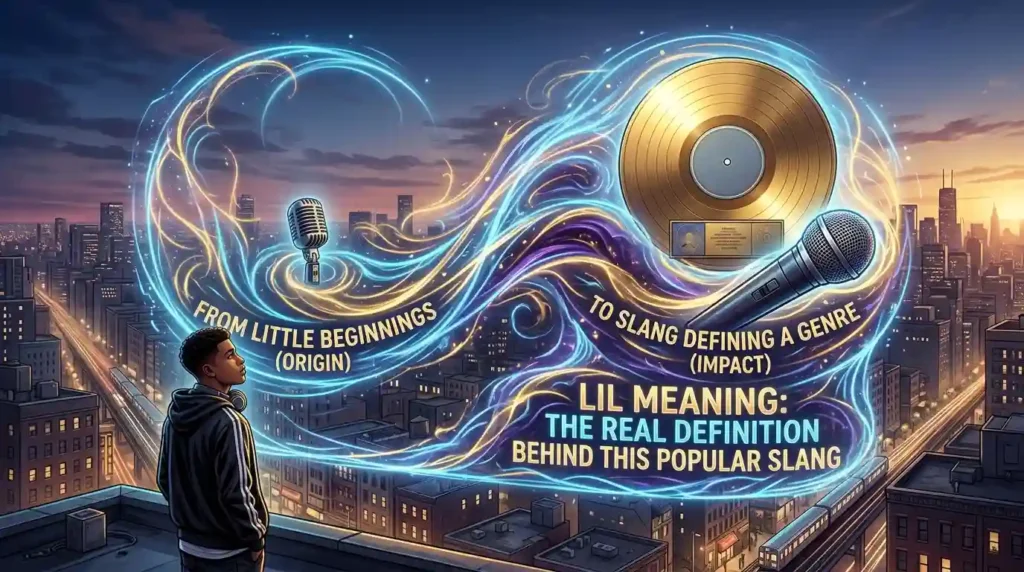
Understanding Lil meaning is important because this popular abbreviation has become a common part of modern digital communication and internet slang. The term is a shortened form of “little” and is often used as a nickname, casual expression, or style choice, especially in social media conversations and hip-hop culture. Whether you’re reading a TikTok comment, chatting with friends, or listening to rap music, chances are you’ll come across “lil” regularly.
Have you ever seen someone write “lil” instead of “little” and wondered what it means?
The term appears everywhere online. You’ll find it in text messages, social media captions, memes, gaming communities, and even the names of famous musicians. While it may look like a modern internet invention, the word has existed in spoken English for much longer than many. This guide explains exactly what “lil” means, where it came from, how people use it, and why it remains one of the most recognizable slang terms on the internet.
What Does Lil Mean?
The simplest lil meaning is:
“Little”
“Lil” is an informal shortened spelling of the word little.
People use it in casual communication to save time, create a friendly tone, or imitate spoken pronunciation.
For example:
- Lil brother = Little brother
- Lil dog = Little dog
- Lil mistake = Small mistake
In most situations, “lil” and “little” have the same meaning.
However, context can sometimes give the term additional cultural or stylistic significance.
Quick Definition
| Term | Meaning |
| Lil | Informal spelling of “little” |
| Usage | Texting, slang, social media, music |
| Tone | Casual, friendly, conversational |
| Formal Writing | Generally avoided |
Where Did the Word Lil Come From?
Many people assume the internet created “lil.”
In reality, the term existed long before social media.
“Lil” developed as a phonetic spelling of how some English speakers pronounce the word “little” in casual conversation.
Instead of saying:
Little
Many speakers naturally pronounce it closer to:
Lil
Over time, writers began spelling it the way it sounded.
This process is common in language evolution.
Other examples include:
- Gonna = Going to
- Wanna = Want to
- Kinda = Kind of
- Gimme = Give me
“Lil” follows the same pattern.
Why Is Lil So Popular Online?
The internet rewards quick communication.
According to data from multiple social media platforms, billions of messages are exchanged daily through texting apps, social networks, and online communities.
Users often shorten words to:
- Type faster
- Sound casual
- Match conversational speech
- Fit character limits
- Create a relatable tone
Because of these factors, “lil” became a natural choice in digital communication.
Instead of writing:
“My little brother”
Many users simply write:
“My lil brother”
The meaning stays the same while the message feels more informal.
Lil Meaning in Text Messages
One of the most common uses of the term appears in texting.
In text conversations, “lil” usually means:
- Small
- Young
- Minor
- Cute
- Slight
Examples:
Example 1
Friend:
“Running a lil late.”
Meaning:
Running a little late.
Example 2
Friend:
“Need a lil help?”
Meaning:
Need a little help?
Example 3
Friend:
“Just taking a lil break.”
Meaning:
Taking a short break.
In texting, the word rarely carries any hidden meaning.
It simply makes messages feel more relaxed and conversational.
Lil Means on Social Media
Social media helped spread the term worldwide.
Platforms where you’ll commonly see it include:
- TikTok
- Snapchat
- X (Twitter)
- Threads
Examples include:
- Lil vacation vibes
- My lil bestie
- Lil update
- Lil reminder
- Lil win today
In these contexts, “lil” often adds a playful or affectionate tone.
For example:
“Here’s a lil update.”
The speaker isn’t necessarily saying the update is physically small.
Instead, they’re using the word to sound friendly and approachable.
Lil Means in Rap and Hip-Hop Culture
One reason the lil meaning receives so many online searches is its connection to hip-hop.
Many famous artists use “Lil” as part of their stage name.
Examples include:
| Artist | Stage Name |
| Lil Wayne | Rapper |
| Lil Baby | Rapper |
| Lil Uzi Vert | Rapper |
| Lil Durk | Rapper |
| Lil Yachty | Rapper |
The practice dates back decades.
In hip-hop culture, “Lil” often indicates:
- Youthfulness
- Respect for an older mentor
- A nickname from childhood
- Community identity
Historically, younger individuals were sometimes called “Lil” to distinguish them from older family members or community members with the same name.
For example:
- Big Mike
- Lil Mike
This naming tradition eventually became common in rap culture.
Why Do So Many Rappers Use Lil?
The popularity of “Lil” in music has several explanations.
1. It Reflects Real Nicknames
Many artists adopted nicknames they already used growing up.
2. It Creates a Memorable Brand
Short names are easier to remember.
3. It Connects to Hip-Hop Traditions
Using “Lil” aligns artists with a long-standing cultural convention.
4. It Signals Authenticity
For many performers, the nickname reflects genuine personal history.
As hip-hop became one of the world’s most influential music genres, the term gained mainstream recognition.
Lil vs Little: What’s the Difference?
Although they generally mean the same thing, there are differences in usage.
| Lil | Little |
| Informal | Formal and informal |
| Common online | Common everywhere |
| Slang style | Standard English |
| Social media friendly | Professional writing |
| Casual tone | Neutral tone |
Use “Lil” When:
- Texting friends
- Writing captions
- Posting on social media
- Creating casual content
Use “Little” When:
- Writing academic papers
- Professional emails
- Business communication
- Formal publications
Understanding the difference helps ensure your writing matches the situation.
Common Examples of Lil in Everyday Language
The word appears in many phrases.
Examples include:
Family
- My lil sister
- My lil cousin
- My lil brother
Friendship
- My lil buddy
- My lil friend
Everyday Activities
- A lil snack
- A lil break
- A lil vacation
- A lil surprise
Humor
- Just a lil chaos
- A lil drama
- A lil mistake
In most cases, the phrase feels more relaxed than using “little.”
Is Lil Considered Proper English?
Technically, no.
Major dictionaries recognize “lil” as an informal or slang spelling.
Standard English still considers little the correct spelling for formal writing.
However, language experts widely acknowledge that informal spellings play an important role in digital communication.
Just because a word isn’t formal doesn’t mean it’s incorrect in casual contexts.
How Social Media Changed the Popularity of Lil
The rise of social media dramatically increased the visibility of slang terms.
Research from digital communication studies consistently shows that users prefer conversational language online.
Informal words often perform better because they:
- Feel authentic
- Encourage engagement
- Sound human
- Create familiarity
As platforms like TikTok and Instagram grew, expressions such as “lil” became part of everyday online vocabulary.
Today, millions of users encounter the term daily.
Is Lil Always Positive?
Not necessarily.
The meaning depends on context.
Positive Example
“My lil champion.”
Meaning:
Affectionate and supportive.
Neutral Example
“Just a lil issue.”
Meaning:
A small problem.
Negative Example
“That lil excuse won’t work.”
Meaning:
Dismissive or critical.
Like many slang terms, tone changes based on how the speaker uses it.
Common Misconceptions About Lil
Myth 1: Lil Is Only Used by Teenagers
False.
People of all ages use it online.
Myth 2: Lil Came From TikTok
False.
The word existed long before social media.
Myth 3: Lil Is Only a Rap Term
False.
Rap culture helped popularize it, but the term is used broadly in everyday language.
Myth 4: Lil Has a Secret Meaning
False.
In most cases, it simply means “little.”
When Should You Avoid Using Lil?
There are situations where standard English works better.
Avoid using “lil” in:
- Job applications
- Academic papers
- Business proposals
- Legal documents
- Professional reports
Instead, write:
Little
This maintains credibility and professionalism.
Why Understanding Slang Matters
Internet language evolves quickly.
New slang terms appear every year, while older terms gain new meanings.
Understanding expressions like “lil” helps people:
- Communicate effectively
- Interpret online conversations
- Understand pop culture
- Follow social media trends
- Connect with younger audiences
As digital communication continues to shape modern language, slang literacy becomes increasingly valuable.
Frequently Asked Questions (FAQ)
What does lil mean?
“Lil” is an informal spelling of the word little.
What is the lil meaning in text messages?
In texting, it usually means “a little,” “small,” or “slightly.”
Example:
“I’m a lil tired.”
Is lil a real word?
Yes. It is widely recognized as an informal slang spelling of “little.”
Why do rappers use Lil in their names?
Many rappers use it because of childhood nicknames, hip-hop traditions, and personal branding.
Does Lil mean young?
Sometimes.
When used before a person’s name, it can suggest youthfulness or a junior status.
Is Lil formal English?
No.
Formal writing generally uses the standard spelling:
Little
What does Lil mean on TikTok?
The meaning is usually the same as “little.” It often adds a casual or playful tone.
Is Lil and Little the same thing?
Yes, in most situations they have the same meaning.
The difference is that “lil” is informal.
Can adults use the word Lil?
Absolutely.
People of all ages use the term in casual communication.
Is Lil considered slang?
Yes. Most dictionaries classify it as informal slang or a colloquial spelling.
Conclusion
The lil meaning is straightforward: it is an informal version of the word little. While the term has existed in spoken English for many years, texting, social media, and hip-hop culture helped make it a globally recognized piece of internet slang.
Whether you see it in a text message, a TikTok caption, or a rapper’s stage name, “lil” usually conveys the same idea—something small, young, minor, or affectionate. Understanding its meaning not only helps you interpret online conversations but also provides insight into how language continues to evolve in the digital age.
As communication becomes increasingly informal across online platforms, terms like “lil” are likely to remain part of everyday internet vocabulary for years to come.Lil Meaning: The Real Definition Behind This Popular Internet Slang
Understanding Lil meaning is important because this popular abbreviation has become a common part of modern digital communication and internet slang. The term is a shortened form of “little” and is often used as a nickname, casual expression, or style choice, especially in social media conversations and hip-hop culture. Whether you’re reading a TikTok comment, chatting with friends, or listening to rap music, chances are you’ll come across “lil” regularly.
Read More Geeked Means: Slang Meaning, Uses & Examples Explained