
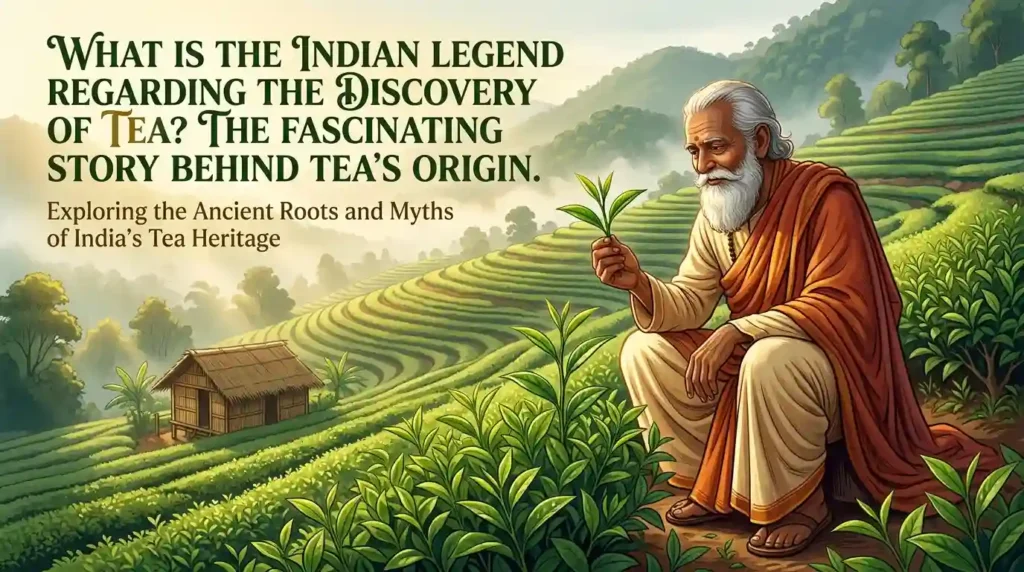
Many people ask: what is the indian legend regarding the discovery of tea? According to Indian folklore, people link the discovery of tea to the Buddhist monk Bodhidharma, and many believe he introduced tea as a way to stay awake during meditation. While historians debate the accuracy of this story, the legend remains one of the most famous explanations of how tea became connected with spiritual practice and daily life.
Tea is one of the world’s most popular beverages, enjoyed by billions of people every day. From traditional Indian chai stalls to Japanese tea ceremonies and British afternoon tea, this simple drink has become deeply connected with cultures around the globe. But behind every cup of tea lies a fascinating history filled with myths, legends, and historical discoveries.
The story blends mythology with cultural traditions, showing how tea evolved from a mysterious plant into a global symbol of hospitality, energy, and connection.
The Indian Legend Regarding the Discovery of Tea
According to the legend, Bodhidharma traveled from India to China around the 5th or 6th century CE to spread Buddhist teachings. During his years of meditation, he took a vow to remain awake and avoid sleep so he could maintain complete focus.
However, after several years of meditation, Bodhidharma became tired and fell asleep. When he woke up, he was extremely disappointed with himself. As a symbolic punishment, the legend says he cut off his eyelids and threw them onto the ground.
From those eyelids, a tea plant supposedly grew.People later discovered that the leaves of this plant could refresh the mind and help monks stay alert during long meditation sessions.
Although many people consider this story a legend rather than historical fact, it explains why tea became strongly associated with mindfulness, meditation, and spiritual discipline.
Understanding the Bodhidharma Tea Legend
The Bodhidharma story is one of several traditional accounts explaining the origin of tea. It is important to understand the difference between cultural legends and historical evidence.
Legend vs Historical Evidence
| Aspect | Legend | Historical Evidence |
| Main figure | Bodhidharma | Ancient Chinese tea communities |
| Location | India and China | Southwest China, especially the Yunnan region |
| Time period | Around 5th–6th century CE | Tea use documented thousands of years ago |
| Meaning | Spiritual explanation of tea’s discovery | Agricultural and cultural development |
Historical research generally points to China as the earliest known region where tea was cultivated and consumed. Ancient Chinese records suggest tea drinking existed more than 2,000 years ago.
According to many historians, tea plants originated in areas of southwest China, especially regions near modern-day Yunnan, where wild tea plants still grow today.
Read More What Does WYA Mean in Texting? Complete Guide to Meaning, Usage, and Real Examples:
Did Tea Really Originate in India?
The question of what is the indian legend regarding the discovery of tea often leads people to wonder whether India was the birthplace of tea itself.
India has one of the world’s richest tea traditions, but historical evidence suggests that tea was cultivated and consumed in China before becoming widely established in India.
However, India does have its own important tea history.
The country is now one of the largest tea producers worldwide, with famous tea-growing regions including:
- Assam
- Darjeeling
- Nilgiris
- Kangra Valley
India produces millions of kilograms of tea annually and is especially known for black teas such as Assam tea and Darjeeling tea.
According to the Tea Board of India, the country produces over 1.3 billion kilograms of tea annually, making it one of the world’s top tea-producing nations.
The Role of Tea in Indian Culture
Although tea may not have originated in India according to historical evidence, it has become an essential part of Indian daily life.
The introduction of large-scale tea cultivation in India began during British colonial rule in the 19th century. The British East India Company encouraged tea farming to compete with China’s dominance in the global tea market.
The discovery of native tea plants in Assam during the early 1800s played an important role in developing India’s tea industry.
Today, chai is more than just a beverage in India. It represents:
- Hospitality and friendship
- Social connection
- Everyday routines
- Regional traditions
A simple cup of masala chai often brings people together at homes, workplaces, markets, and roadside tea stalls.
Early History of Tea
The earliest tea consumption is often associated with ancient China. A popular Chinese legend credits Emperor Shen Nong with discovering tea around 2737 BCE when tea leaves accidentally fell into boiling water.
Like the Indian Bodhidharma story, this account is considered a legend rather than verified history.
Over time, tea spread through:
- Buddhist monks traveling across Asia
- Trade routes
- European merchants
- Colonial agricultural expansion
Global Growth of Tea
By the 17th century, tea had become popular in Europe, especially in Britain. Later, tea plantations expanded across India, Sri Lanka, Africa, and other tropical regions.
Today, tea is the second-most consumed drink in the world after water.
Scientific Facts About Tea and Its Benefits
While many tea origin stories are based on legends, modern research has studied tea from a scientific perspective. Tea leaves contain naturally occurring compounds that contribute to their flavor, aroma, and potential health effects.
The most researched compounds in tea include:
- Polyphenols: Plant compounds with antioxidant properties
- Catechins: Naturally occurring flavonoids found especially in green tea
- Caffeine: A natural stimulant that may improve alertness
- L-theanine: An amino acid associated with relaxation and mental focus
Research published in scientific journals has examined how regular tea consumption may be linked with various health benefits. However, experts emphasize that tea should be considered part of a balanced lifestyle rather than a replacement for medical treatment.
Why Monks Connected Tea With Focus
One reason tea became popular among Buddhist monks was its ability to promote alertness. The combination of caffeine and L-theanine can create a feeling of improved concentration without the same intensity some people experience from coffee.
This connection between tea and mindfulness helps explain why stories like the Bodhidharma legend became so influential.
The legend reflects a deeper cultural idea:
- Tea supports awareness
- Tea encourages discipline
- Tea creates moments of reflection
Famous Indian Tea Varieties and Their Origins
India’s tea industry is known worldwide for producing unique varieties with distinct flavors, growing conditions, and traditions.
| Tea Type | Region | Characteristics |
| Assam Tea | Assam | Strong flavor, rich color, malty taste |
| Darjeeling Tea | West Bengal | Floral aroma, delicate flavor |
| Nilgiri Tea | Tamil Nadu | Fragrant and smooth taste |
| Kangra Tea | Himachal Pradesh | Light flavor with floral notes |
Assam Tea
Assam tea comes from northeastern India and is one of the most recognized Indian tea varieties.
The region’s warm climate, rainfall, and fertile soil create ideal conditions for tea cultivation. Assam tea is commonly used in Indian chai because of its strong flavor and ability to blend well with milk and spices.
Darjeeling Tea
Often called the “Champagne of Teas,” Darjeeling tea is famous for its delicate aroma and unique taste.
The tea gardens of Darjeeling are located in the Himalayan foothills, where altitude and climate influence the flavor profile of the leaves.
Why the Indian Tea Discovery Legend Still Matters Today
Many readers searching what is the indian legend regarding the discovery of tea is are interested not only in historical facts but also in the cultural meaning behind the story.
Legends survive because they communicate values, beliefs, and traditions.
The Bodhidharma tea legend represents several important ideas:
1. Tea as a Symbol of Awareness
The story connects tea with staying awake, maintaining discipline, and achieving mental clarity.
2. Tea as a Spiritual Tradition
For centuries, tea has been connected with meditation practices in Buddhist communities across Asia.
3. Tea as Cultural Heritage
Even when a legend cannot be scientifically proven, it can still influence how societies understand and appreciate traditions.
Many cultures preserve stories about the origins of important foods and drinks because these stories create a sense of identity.
Myth vs Reality: What Do Historians Say?
When exploring the discovery of tea, it is important to separate popular stories from historical research.
The Legend
The Indian legend says that Bodhidharma’s sacrifice created the tea plant, allowing monks to stay awake during meditation.
The Historical View
Historians generally believe:
- Tea plants originated in ancient China.
- Tea drinking developed thousands of years ago in Chinese communities.
- India became a major tea producer much later.
- Indian tea culture developed through both indigenous discoveries and colonial-era cultivation.
Both perspectives are valuable because they explain different aspects of tea history:
- History explains how tea developed.
- Legends explain how people emotionally connected with tea.
Frequently Asked Questions About the Indian Tea Discovery Legend
1. What is the Indian legend regarding the discovery of tea?
The Indian legend regarding the discovery of tea tells the story of Bodhidharma, a Buddhist monk who supposedly created the first tea plant after throwing away his eyelids to avoid sleep during meditation. The leaves were believed to help monks stay awake and focused.
2. Is the Bodhidharma tea story historically true?
No confirmed historical evidence proves that Bodhidharma discovered tea. The story is considered a cultural legend that reflects the relationship between tea, meditation, and spiritual practices.
3. Did tea originate in India or China?
Historical evidence suggests tea originated in China, particularly in southwest regions such as Yunnan. India later became one of the world’s largest tea-producing countries.
4. Who is credited with discovering tea?
Chinese tradition often credits Emperor Shen Nong with discovering tea around 2737 BCE. However, this story is also considered a legend rather than a verified historical event.
5. When did tea cultivation begin in India?
Large-scale tea cultivation in India began during the 19th century under British colonial development. The discovery of native tea plants in Assam helped establish India’s tea industry.
6. Why is Bodhidharma connected with tea?
Bodhidharma is connected with tea because Buddhist traditions associate tea with meditation, alertness, and mental concentration. The legend highlights tea’s role in helping monks maintain focus.
7. What makes Indian tea famous worldwide?
Indian tea is famous because of its diverse flavors, unique growing regions, and varieties such as Assam, Darjeeling, and Nilgiri tea.
8. How important is tea in Indian culture?
Tea is deeply important in Indian culture. Chai is commonly shared with family, friends, guests, and colleagues, making it a symbol of hospitality and social connection.
Conclusion:
The answer to what is the indian legend regarding the discovery of tea lies in a fascinating blend of mythology, spirituality, and cultural history. The story of Bodhidharma and the tea plant may not be scientifically proven, but it remains one of the most meaningful legends connected to tea.
Historical research shows that tea likely originated in China, while India later developed one of the world’s strongest tea traditions. Today, Indian tea represents much more than a drink—it represents culture, connection, and centuries of human tradition.
Whether enjoyed as a simple cup of chai or appreciated through ancient stories, tea continues to bring people together around the world. The legends surrounding its discovery remind us that food and beverages often carry stories that are just as important as their origins.
Love To Read More What does bbl stand for: Everything You Need to Know Before Getting a Brazilian Butt Lift