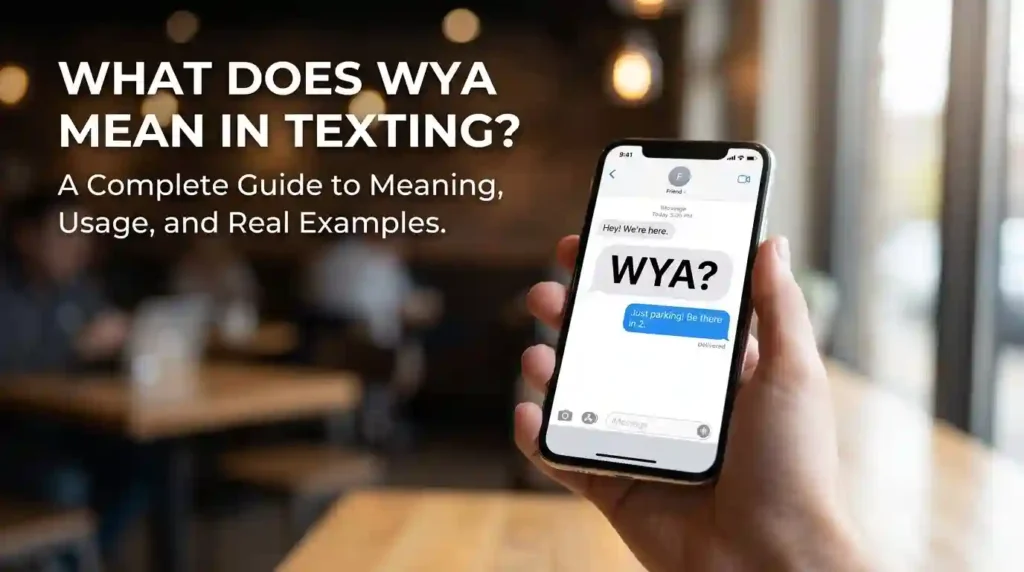
That difference is exactly why people search for eta meaning in text when they first see it used in real conversations. On the surface, it looks like simple shorthand, but in practice it shifts tone depending on who is asking and why.
In professional settings, timing matters. Deadlines, meetings, and deliverables all depend on clarity. In casual chats, the same phrase becomes lighter, often used just to check when someone will arrive or respond. This dual usage is where confusion starts, especially for people trying to understand eta meaning in real communication contexts.
The abbreviation itself comes from “Estimated Time of Arrival,” but messaging culture has stretched it beyond travel. Now it applies to tasks, responses, deliveries, and even online presence. Understanding how tone changes between work and casual use helps avoid miscommunication.
This article breaks down how eta means shifts depending on context, why it is used so widely, and what it actually signals in both workplace and everyday conversations.
What is ETA in Messaging?
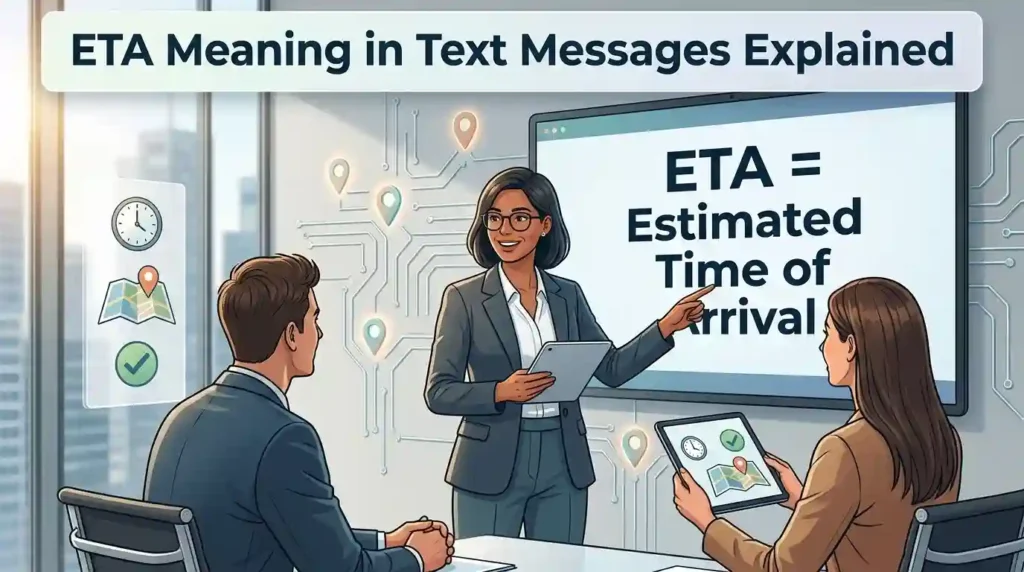
ETA stands for “Estimated Time of Arrival.” In traditional use, it referred to travel—how long it would take someone or something to reach a destination. In digital communication, however, it has expanded far beyond transportation.
When people search for eta meaning, they are usually trying to understand this modern adaptation. Instead of only referring to physical arrival, it now includes task completion, message replies, and availability.
For example:
- “What’s your ETA on finishing the file?”
- “My ETA is 10 minutes.”
- “ETA for your reply?”
In each case, the meaning revolves around time estimation rather than exact scheduling.
In professional communication, eta meaning in text often carries expectations tied to responsibility. It is not just curiosity—it is a way to manage workflow and coordination.
In casual environments, the same term feels less strict. Friends might use it simply to ask when someone will show up or respond.
This flexibility is why eta meaning has become a widely searched phrase. People want to know whether it is formal, informal, or something in between. The answer is that it depends entirely on context and tone.
ETA in Work Chats: Structure, Expectations, and Pressure
In workplace communication, ETA is not just a question—it is a planning tool. When a manager asks for an ETA, they are trying to align schedules, deadlines, and team dependencies.
For example:
- A developer updating a project timeline
- A designer reporting task completion
- A logistics team tracking delivery status
In all these cases, ETA is tied to responsibility.
A simple message like “What’s your ETA?” can carry weight depending on hierarchy and urgency. It may require a precise estimate rather than a vague answer.
This is where eta means become more formal. Unlike casual chats, there is usually an expectation of accuracy. Saying “soon” might not be enough in a structured work environment.
Professionals often use ETA to:
- Coordinate team dependencies
- Adjust project timelines
- Communicate delays early
- Set expectations with clients
ETA in Casual Text Messages: Relaxed and Flexible Usage
Outside of work, ETA becomes much lighter in tone. Among friends, it simply means “when will you be here?” or “how long until you respond?”
This casual use is where eta meaning in text feels most flexible. There are no strict deadlines or formal expectations—just general curiosity.
For example:
- “What’s your ETA? We’re waiting for you 😄”
- “My ETA is 5 mins, stuck in traffic”
- “Send me your ETA lol”
In these situations, tone matters more than precision. A rough estimate is usually enough.
Unlike workplace communication, casual use of eta often includes emojis, slang, or humor. It is part of friendly conversation rather than structured planning.
People also use it in social situations like:
- Meeting friends at a café
- Joining an online game
- Responding during casual chats
The meaning stays the same, but the pressure disappears.
This contrast is why understanding eta mean is important—it helps avoid overthinking casual messages that are not meant to be strict or formal.
Why ETA Means Different Things in Different Contexts
In work chats, it is structured and tied to deadlines. In casual chats, it is flexible and conversational. The same abbreviation behaves differently based on expectations.
In professional environments, people assume:
- Accuracy matters
- Delays should be communicated clearly
- Time estimates affect other tasks
In casual environments, people assume:
- Estimates are approximate
- Delays are normal
- The tone is friendly, not strict
Even the same message—“What’s your ETA?”—can feel completely different depending on context. A manager asking it feels urgent. A friend asking it feels relaxed.
That difference in tone is what makes eta meaning in text such a commonly searched phrase. People want to decode not just the words, but the intent behind them.
How People Respond to ETA Messages
Responses to ETA questions vary depending on urgency and context.
In professional settings, replies tend to be more structured:
- “ETA: 3:30 PM”
- “Around 2 hours, currently finalizing edits”
- “Delayed by 30 minutes due to review stage”
In casual conversations, responses are more relaxed:
- “5 mins lol”
- “On my way, stuck a bit 😅”
- “Be there soon”
The tone is softer, and precision is less important.
Understanding eta meaning in text helps people choose the right response style. A formal reply in a casual chat might feel too serious, while a vague reply in a work chat might seem unprofessional.
The key is matching tone with context, not just translating the acronym.
Real-World Examples of ETA Usage
To fully understand eta meaning in text, it helps to look at real-life scenarios where it appears naturally.
Example 1 (Work chat):
Manager: “What’s your ETA on the presentation?”
Employee: “ETA is 1 hour, just polishing slides.”
Example 2 (Team coordination):
Colleague: “ETA for bug fix?”
Developer: “About 40 minutes.”
In all cases, it is about timing—but the tone shifts depending on relationship and setting.
Common Mistakes and Misunderstandings
One common mistake is assuming ETA always requires an exact time. In reality, estimates can be flexible depending on context.
When people first encounter eta meaning in text, they sometimes think it must be precise, especially in casual conversations. But that is not always necessary.
Another mistake is interpreting ETA as impatience. In work chats, it may feel strict, but it is usually about coordination, not pressure.
Some users also confuse it with urgency. While it can imply urgency in professional environments, it is not inherently demanding.
Misreading tone is another issue. A simple “ETA?” from a friend might feel abrupt, but it is often just casual checking in.
ETA vs Other Time-Based Slang
ETA is often compared with other expressions used in messaging.
- ASAP (As Soon As Possible): urgent action required
- TBA (To Be Announced): no set time yet
- ETA (Estimated Time of Arrival): expected timing
Unlike ASAP, which signals urgency, ETA is neutral. It simply asks for or provides timing.
In both work and casual settings, eta meaning in text remains more informative than emotional. It focuses on when something will happen rather than how important it is.
This is why it is widely used in both professional and personal communication—it is efficient without being forceful.
FAQ: ETA Meaning in Text Messages
1. What does ETA mean in text messages?
ETA stands for “Estimated Time of Arrival.” It is used to ask or share expected timing for arrival, completion, or response. Many users search meaning of ETA when they first see it in chats.
2. Is ETA formal or informal?
It can be both. In work chats, it is formal and structured. In casual chats, it is relaxed and conversational depending on tone.
3. Does ETA always mean physical arrival?
No. It can also refer to task completion, message replies, or online availability, not just physical movement.
4. How do I reply to an ETA question?
You can reply with an approximate time or status update, depending on context and urgency.
5. Is ETA rude in messages?
No, it is not rude. However, tone can change its perception depending on how it is used.
6. Why do people use ETA instead of full sentences?
It saves time and makes communication faster, especially in work environments and group chats.
7. Can ETA be used in casual chats?
Yes, it is very common in casual conversations, especially when coordinating meetups or responses.
Conclusion
Communication today depends heavily on short forms that carry flexible meaning depending on context. ETA is one of those terms that works smoothly across both professional and casual environments.
Once you understand eta meaning in text, it becomes easier to interpret messages without confusion. In work chats, it helps coordinate tasks and expectations. In casual chats, it simply keeps conversations flowing.
The phrase itself is simple, but its usage is shaped entirely by tone, timing, and the relationship between people. Whether you are managing deadlines or meeting friends, ETA remains a practical and widely used part of modern messaging.